

We’re in the thick of the Philly summer slowdown (I’m gloriously writing this during my annual, come-hell-or-high-water, week down the shore). I hope you’re finding time and making space to pause and breathe.
Luckily, our city’s poets make sure we’ve got plenty of reading for the porch, or the pool, or the park, or while waiting 45 minutes for the 23…
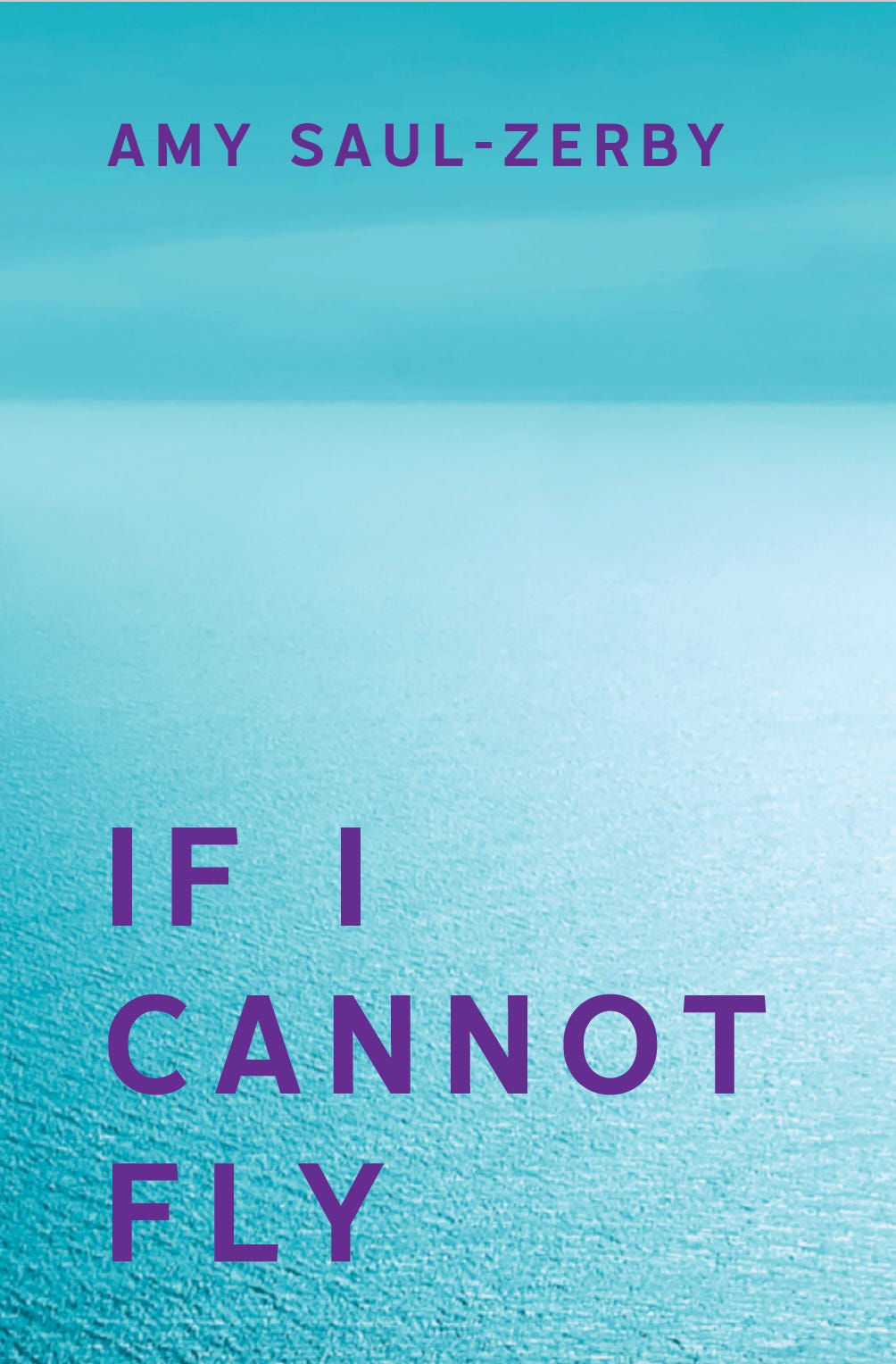
LFG’s OG book reviewer Bird is back, reflecting on Amy Saul-Zerby’s new collection, If I Cannot Fly (Serotonin Press), a brave and graceful exploration of secret traumas, mental illness, and love. In these poems, Saul-Zerby, a key fixture in the Philly poetry scene and the editor of Voicemail Poems, guides readers through visceral experiences and quiet connections, bearing witness to life’s hardest moments. More from Bird below.
I want to ask the midwives amongst us- the ones called midwives, but also the ones called therapists and the ones called friends, and the ones called the family that receives the crisis calls at two in the morning: what percentage of your work is to be a witness to the hardest moment of a person’s life?
It was a question swirling in my brain from the moment I embarked upon Amy Saul-Zerby’s new book, IF I CANNOT FLY. The collection opens with an untitled poem not listed in the table of contents. A laundry list of things, circumstances, people, that “got your tongue”; all the pressures to be silent assembled to be unmade. “Writer’s block… Perfectionism… Shame… Loyalty… Your whole ass family…” It creates an expectation, one that I believe this book meets with bravery and grace, that what follows will be a rendering of all that we are told to keep secret even as secrecy gnaws at our insides.
Something about me is: I’ve had a child and I’ve gotten a divorce. It means I know what it is to labor- the requirement for something sturdy to hold on to; to grab what you can and bear down. To look down at your arms or over your shoulder and say I did that. And to know how close you came to not.
I’m thinking right now about “OCEAN CITY, 2021.” At this point in the collection I think I know some things about the speaker. I have seen her struggle for a solidified sense of reality and the self within that reality, I have seen her grapple with some of the more annoying aspects of mental illness-
I grew up hearing stories
of my mother’s schizophrenic
cousin, who was always off
his meds again, getting
arrested, in the hospital,
staying with his elderly
parents in between
and I couldn’t understand
why he wouldn’t just
keep taking the pills.
from AT MY GRANDMOTHER’S NINETIETH BIRTHDAY, MY UNCLE TELLS ME HOW HE CAME TO ACCEPT HIS BIPOLAR DIAGNOSIS
I ache a little bit because a) I know something about this frustration and b) it seems the speaker recognizes it from both inside and outside the individual on their meds or not. I am reminded of the more tender feelings I have for people who have hurt me or let me down or broken my heart; I’m sitting here in my feelings about it.
I was talking about OCEAN CITY, 2021. So I’m thinking about this poem in the context of the one that precedes it. The speaker is on the beach with her beloved and I watch her make a choice, a choice I have literally watched a loved one make, to walk into the ocean with her sunglasses on; sure that, in spite of everything she knows, she will not lose them. If you recognize my shorthand then you are already hearing an echo of the earlier poem, “when he takes the pills, he’s fine/ and when he doesn’t, he’s not” (AT MY GRANDMOTHER’S NINETIETH…). And she loses the sunglasses. You knew she would. You know this story. Still, the turn startles. It is scary because it blurs the line between illness and self… because more fascist constructions of illness depend upon it being alien- temporary and wrong. The speaker suggests that the impulse to wear her sunglasses into the ocean against her better judgment is the same impulse that drives her to follow her heart towards love- “The story is about/ how you can fight who you are/ and stay on the shore/ or walk into the ocean./ You can go to the people you love/ or play it safe.”
It occurs to me now that I am showing you the beautiful baby the labor bears more than the labor itself. Maybe that’s because I don’t think one can summarize such things in a review. Maybe because it’s easier to tell you what I learned in therapy than to tell you how I learned it. Suffice to say, the power of these poems I focus on depends upon the ones that come before them, sometimes visceral renderings of trauma, dissociation, love-lent clarity and a light to follow out. The speaker says this to a lover; and so in a not small way, Amy whispers it to you… “It’s fucked but at least you’re here with me./
It’s fucked but I’ll try if you will.” (REALITY BITES)
To be a midwife is, I’m sure, an honor. To have a midwife stand beside you is a gift. What we might not talk about enough are all the times when you need a midwife and all you have is yourself. You are your own mooring, you are your own voice telling you to trust. You are the honor. You are the gift.
You really got me with this one, Amy-girl. I’ll stand in the ocean with you any day.
Bird is a poet, teacher, wife, and mother. She believes in the village, practices food magic, and has a fat ass.